Kylie's Song
"You belong among the wildflowers / You belong somewhere close to me / Far away from your trouble and worry / You belong somewhere you feel free." — Tom Petty
6/28/2026 - 80° Sunny


I'm at Broad Run today. Entered the cool forest at Karst Climb with its waterfalls on full display after the rains. Dipped my hands in the chilly water. Karst leads over to a trail I call "Kylie's Song" aka "Moss Gibbs". This trail reminds me of my daughter. It is smart, creative, and simply sylvan. It is a deceptively good workout with bits of elevation and steps. Saw some bunches of Purple Coneflower and Downy Skullcap near one of the trail exits. The rains brought out some cool mushrooms like the Witch's Hat and Rooting Shank. Saw a cool looking Swallowtail Caterpillar crawling across the path. Finished up the circuit on the muddy trails of Riparian Ramble. These were like running on ice and I did end up with a muddy knee. Stopped down at the launch to wash off my muddy dogs. There was some Sumac near the parking lot. There were lots of these in the woods behind my house growing up.
Gemini created some animations to go along with the enhanced images for The Crossing and The Break.
Past and Present
Stepping into the Garden, it feels like wandering through a series of secret outdoor rooms—a beautiful nod to Frederick Law Olmsted’s historic 19th-century vision brought to life for a new generation. I found a quiet spot to rest in the Kentucky Coffee Tree Rondel, nearby, 125-year-old towering oak tree that has stood guard over this limestone hillside since long before these trails were ever mapped. Watching the complex, winding patterns of the stone paths disappear into a nearby sinkhole meadow, my mind drifted to the massive tech shifts dominating science news this week, specifically the buzz surrounding Anthropic’s experimental Mythos AI system. Just as the garden’s root systems safely lock away nutrients, this new frontier software operates deep in the digital undergrowth. It is fascinating how both nature and technology rely on these intricate, invisible networks.
Sitting there in the dappled shade, the stillness of the woods felt like a perfect counterweight to the roaring energy of the continent right now. The 2026 World Cup has been capturing my attention, and today the high-stakes single-elimination knockout rounds officially kicked off with Canada squaring off against South Africa. In a global landscape that can often feel heavily weighted by political elections and the passing shadows of international conflict, these massive sporting events provide a rare, unifying rhythm. Running out past the Redbud Rondel, I couldn't help but feel a wave of genuine optimism. Whether we are building common ground through a shared global game, the brilliant engineering of AI, or simply preserving a patch of living Kentucky woodland, humanity keeps finding ways to plant the seeds for a brighter, more resilient tomorrow.


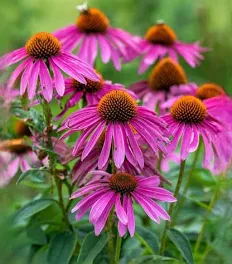
The Purple Coneflower (Echinacea purpurea) - A hardy, iconic native perennial easily recognized by its striking pinkish-purple petals that radiate from a raised, spiky, coppery-brown central cone. Thriving along sunny trail edges and open meadows in Kentucky, this resilient wildflower is a powerhouse for local biodiversity, serving as a critical nectar source for butterflies and bumblebees throughout the summer months. As autumn approaches, the flower heads dry out and turn black, transforming into a vital winter food source for local songbirds, like goldfinches, who rely on the nutrient-rich seeds.
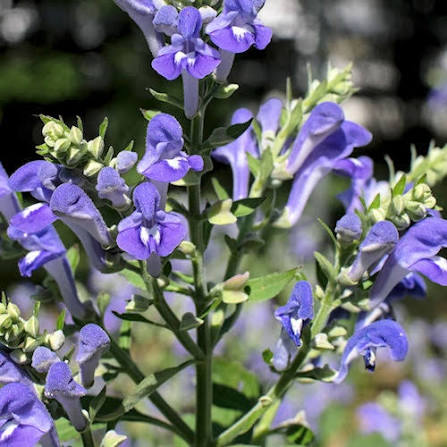
Downy Skullcap (Scutellaria incana) - A charming member of the mint family that features clusters of tubular, two-lipped lavender-blue blossoms shaped like tiny hoods or helmets. It earns its "downy" name from the dense layer of fine, soft white hairs coating its square stems and flower buds, giving the plant a velvety texture and a slightly frosted appearance in the trailside shade. Perfectly suited for the dappled sunlight of Broad Run Park's woodland borders, this native plant flourishes in the region's limestone-rich soils and provides an important late-summer pollen source for specialized long-tongued bees.
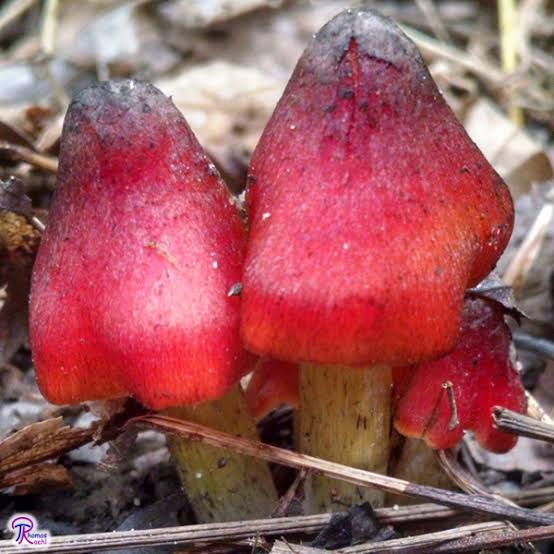
The Red Waxcap (Hygrocybe species) - A jewel-like woodland fungus celebrated for its brilliant, glassy scarlet-to-orange coloration and its distinctly pointed, cone-shaped cap. True to their name, these mushrooms possess a distinctively shiny, waxy texture that makes them glisten vividly against the damp soil and decaying leaf litter of the forest floor. Often popping up in mossy, shaded areas after heavy summer rains, some common species—such as the "Witch's Hat" (Hygrocybe conica)—exhibit a fascinating chemical quirk where their vibrant red flesh slowly bruises and discolors to a stark, jet-black when touched or as they naturally mature.
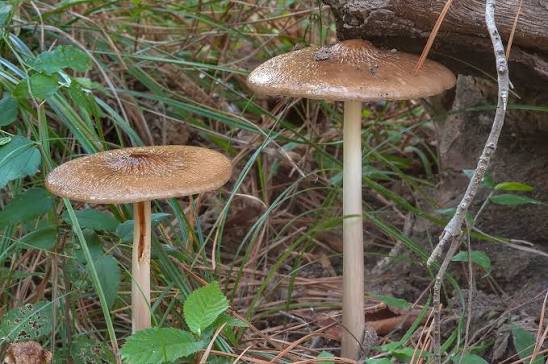
Rooting Shank (Hymenopellis furfuracea) - is an elegant, earth-toned woodland mushroom easily recognized by its wrinkled, slightly sticky, cinnamon-tan cap and its remarkable underground anatomy. When young, the cap is bell-shaped with a distinct central bump, but it gradually flattens and develops wavy, tattered margins as it matures, blending seamlessly into the fallen leaf litter. The defining characteristic of this species is its extraordinarily long, tapering, taproot-like stem extension—known as a pseudorhiza—which burrows deep into the forest floor to anchor itself directly onto decaying, buried hardwood roots or old tree stumps.
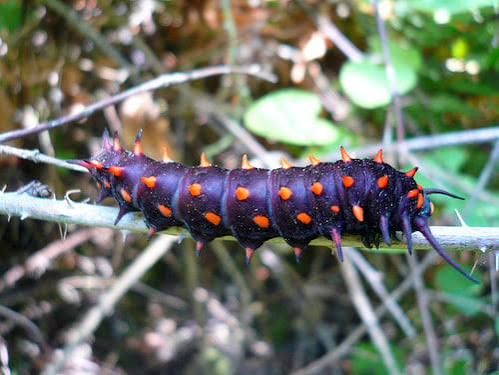
Pipevine Swallowtail Caterpillar (Battus philenor) - A striking and formidable-looking larva easily identified by its velvety, purplish-black body adorned with rows of vibrant orange-red fleshy tubercles and long, whip-like filaments near its head. Commonly found crawling along the forest floors and limestone paths of Kentucky's woodlands, this caterpillar feeds exclusively on host plants like Virginia Snakeroot and Dutchman's Pipe, safely absorbing and storing the plants' toxic chemical compounds within its own tissues. This specialized diet renders the caterpillar highly unpalatable and poisonous to birds and other predators—a danger boldly advertised by its bright, warning coloration and its ability to deploy a foul-smelling, horn-like organ called an osmeterium when threatened. After completing its feeding cycle, this armored crawler will pupate and ultimately transform into one of the region's most magnificent butterflies, celebrated for the brilliant, iridescent blue-green sheen on its hindwings.
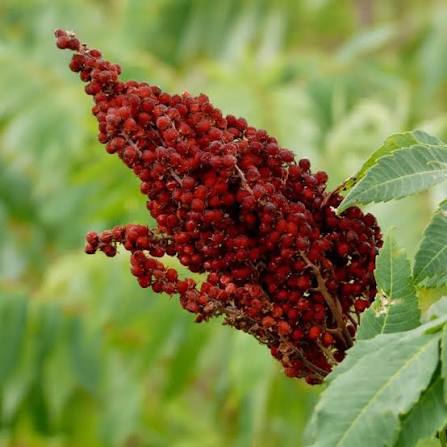
Sumac shrub (Rhus species) - Particularly the Smooth and Staghorn varieties native to Kentucky, is a resilient, sun-loving woody plant easily distinguished by its large, fern-like compound leaves and striking, upright cones of velvety crimson berries. Growing abundantly along forest edges and trail borders, this ecologically vital shrub provides a critical winter lifeline for local birds and mammals, as its dense fruit clusters persist long after the first snowfall. While often mistaken for its toxic relative, harmless wild sumac is completely safe to touch and is celebrated for its spectacular autumn transformation, when its serrated foliage ignites into a brilliant display of fiery oranges and deep reds.