Scott's Gap Trail
"When you touch the dirt on the track, you have the feeling, at that moment, that you are on the center stage of the universe." — Steve Cauthen
4/26/2026 - 60° Sunny


I pulled into the parking lot off Scott's Gap Road. Nice little warmup on the Meadow Meander loop, which connects to the Gap trail. Saw some Wingstem, but they will not flower until summer. There was one large Butterweed, some Charlies, Fleabane and blackberry brambles. Found some neat blooms from a Tulip Tree on the forest floor.
There is what looks to be a 39-40 Dodge or Plymouth Sedan rusting away in one of the creek beds. It has newer tires from the 70s and was probably an old farm beater.
There is a great hill on this run, normally you encounter it early, but I ran the trail in the other direction, going down at the end. After completing the loop I went back and charged up the hill. Then ran up the short cut. The shortcut is about a 60 degree incline and trying to go down is precarious. I had to stop once on each uphill climb. Nice view at the top.
Past and Present
The trail is named for the Scott family, early settlers whose homestead once occupied this rugged terrain before it was folded into the Jefferson Memorial Forest. As I passed that rusted Dodge, it was easy to imagine it as a descendant of the horse-drawn wagons that would have navigated these same gaps a century prior. There is a strange, quiet tension in the forest this week—the same kind of energy building up at Churchill Downs just a few miles north. With the 152nd Kentucky Derby draw finalized, everyone is talking about the favorites taking the rail. It’s a bit like that 60-degree shortcut; whether you're a thoroughbred or a trail runner, you’ve just got to commit to the incline and hope your lungs hold out.
The news on the radio back at the trailhead felt worlds away from the silent Tulip Tree blooms. While I was tracking mud, the world was tracking the latest geopolitical shifts in the Middle East and a new AI "optical tornado" tech that’s supposedly going to revolutionize how we communicate. Even with the shifting political landscape and the usual global friction, it’s refreshing to see nature making its own headlines—like the ongoing efforts to expand biodiversity protection globally. Standing at the top of that ridge, looking out over the Knobs, it’s easy to feel optimistic. Between the high-tech breakthroughs and the simple resilience of a Red Oak sapling, there's a pretty clear path forward if you know where to look.


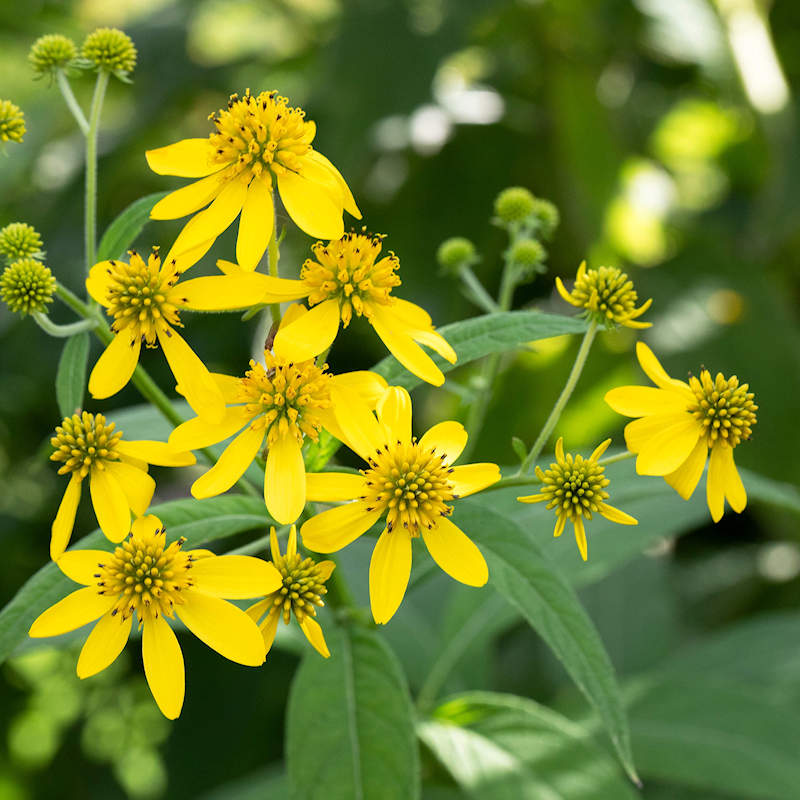
Wingstem (Verbesina alternifolia) - In Louisville, particularly along the Scott Gap Trail and throughout Jefferson Memorial Forest, Wingstem is a local powerhouse of the late-summer landscape. While it begins as the serrated, leafy stalk you spotted in April, it eventually towers over other forest floor plants, sometimes reaching heights of eight feet. By August, it earns its name from the distinctive, leafy "wings" that run vertically down its stem, topped with shaggy, bright yellow flowers that look like daisies having a "bad hair day." It’s a vital late-season pit stop for Louisville's native pollinators and migrating Monarch butterflies, and thanks to its slightly rough texture, it’s one of the few plants our local deer population usually leaves off the menu.
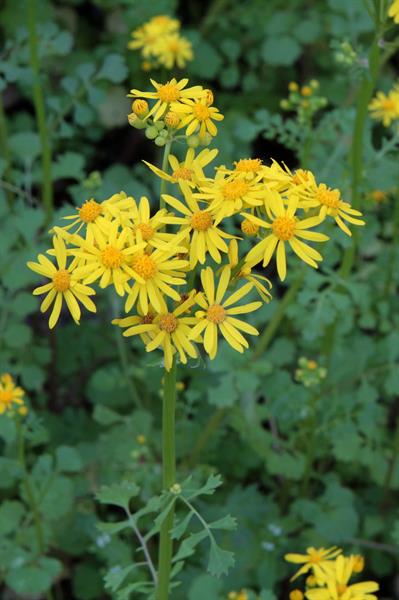
Butterweed (Packera glabella) - also known as Cressleaf Groundsel, is a striking native annual that dominates the Kentucky landscape in mid-to-late April. Thriving in the moist, disturbed soils often found along Louisville’s forest edges and floodplains, it is easily identified by its vibrant clusters of yellow, daisy-like flowers and its notably thick, hollow, succulent stems. Unlike many delicate woodland wildflowers, Butterweed is a robust grower, often forming dense, golden "carpets" in low-lying areas. While it provides an important early-season nectar source for local pollinators, it is also known for containing pyrrolizidine alkaloids, making it toxic to livestock—a trait that helps it stand its ground against foraging animals in the wild. While it is a close relative of Golden Ragwort, Butterweed is a much more robust, "succulent" plant characterized by its thick, hollow, and often fleshy green stems.
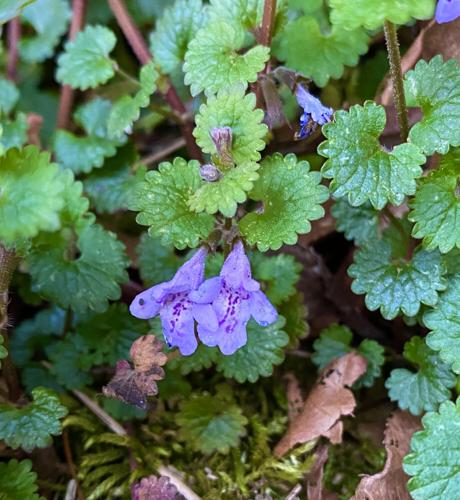
Ground Ivy (Glechoma hederacea) - Often referred to locally in Kentucky as "Creeping Charlie" or "Gill-over-the-ground," is an aromatic, evergreen perennial that thrives in the moist, shaded soils of the Bluegrass region. Originally brought over by European settlers for its medicinal and brewing properties, it has become a ubiquitous "opportunist" in Kentucky landscapes, spreading rapidly via creeping runners that root at every node. In the spring, it produces clusters of small, tubular, purplish-blue flowers that provide a vital early-season nectar source for native bees and pollinators. While its ability to form dense, minty-smelling mats makes it a frustrating weed for gardeners, in wilder areas like Tom Sawyer Park, it serves as a resilient groundcover that stabilizes the muddy banks of wetlands and vernal pools.
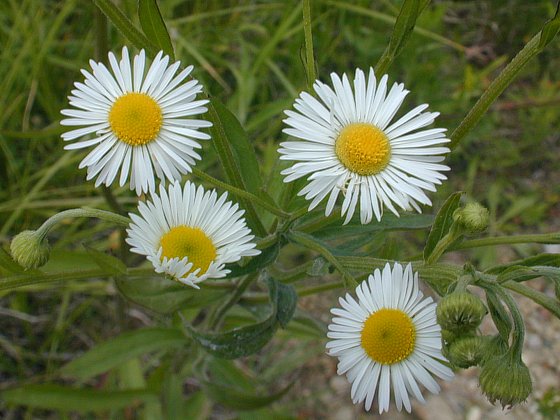
Philadelphia Fleabane (Erigeron philadelphicus) - is a ubiquitous spring wildflower that blankets the roadsides and trail margins of the Knobs throughout April and May. While often colloquially dismissed as a "wild daisy," it is distinguished by its exceptionally fine, thread-like white rays—numbering up to 150 per flower—and its hairy stems with leaves that tightly clasp the stalk. This native perennial is a vital generalist for local biodiversity, serving as a reliable nectar source for a wide array of small native bees, hoverflies, and butterflies during the transition from early spring to summer. Hardy and adaptable, it is one of the most recognizable "volunteers" in the forest ecosystem, often found growing in cheerful clusters alongside Wingstem and Blackberries where the canopy opens to let in the sun.
The name comes from an old folk belief that the dried plants could be burned or stuffed into sachets to drive away fleas. While it doesn't actually work as a modern pest control, the name stuck!
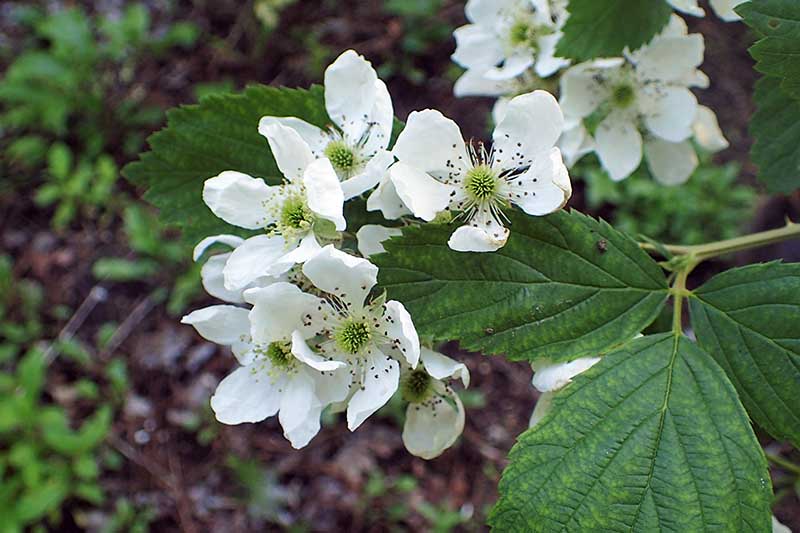
Common Blackberry (Rubus allegheniensis) - is a prolific native shrub that defines the "edge" habitat of places. During late April and May, these hardy perennials erupt in five-petaled white blossoms that serve as a critical early-season nectar source for Kentucky’s native bees and butterflies. Growing in dense, thorny thickets known as brambles, the plants utilize biennial "canes"—the first-year primocanes focus on rapid growth, while the second-year floricanes produce the flowers and the iconic, aggregate fruit. By late June, these blossoms transition into deep purple-black berries that are a staple for local wildlife and a favorite for foragers along the sun-drenched ridges of the Scott Gap Trail.
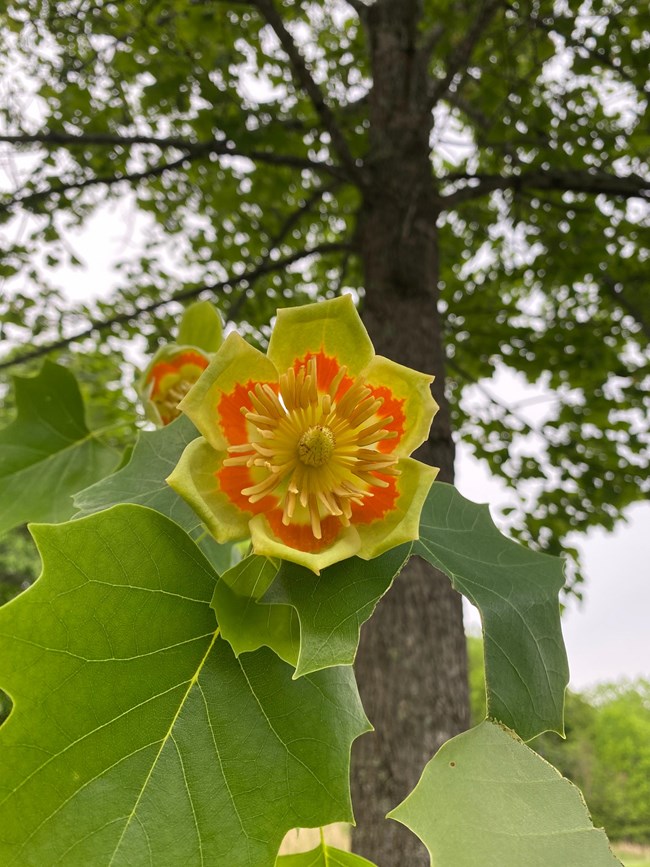
The Tulip Tree (Liriodendron tulipifera) - The towering state tree of Kentucky, is one of the most magnificent hardwoods in the Louisville area. Belonging to the Magnolia family, it is easily distinguished by its unique four-lobed leaves that resemble the silhouette of a tulip and its massive, straight trunk that often reaches heights exceeding 100 feet. In late spring, the tree produces large, cup-shaped flowers with pale green petals and a vibrant orange base; however, because these blooms occur high in the canopy, they are most often discovered by hikers as "gifts" on the forest floor after a windstorm. Beyond its ornamental beauty, the Tulip Tree is a vital ecological asset in the Jefferson Memorial Forest, serving as a primary nectar source for honeybees and a critical timber species prized for its lightweight, fine-grained wood.