Fairmount Falls
"I've been looking for a trail to follow / To a place where the air is refreshing and sweet... / And the world is completely at peace." — Lord Huron
7/19/2026 - 85° Cloudy


Awesome opportunity to run at Fairmount Falls today. I spent a lot of time at the top and bottom of the falls area. A lot of slipping today on the rocks in and off the creek. There were some American Bellflowers near the top of the falls area. Found some great looking Jellied False Coral and Chanterelle too. Lots of Creek Chub in the pools. Saw one nice big stromatoporoid and a winged brachiopod along the creek. These guys formed around 350 million years ago. Got in some good laps around the trail. Nice form over those fallen trees. The part heading back up to the top of the falls is deceptively good. Really nice and well maintained park. The videos have been uploaded to YouTube.
Past and Present
Thinking about those 350-million-year-old fossils always puts things in perspective. It's wild that just this week, Stanford scientists actually solved a 252-million-year-old mass extinction mystery, detailing exactly how the ancient marine ancestors of today's clams and snails managed to survive a global catastrophe when so much else perished. The eccentric 19th-century naturalist Constantine Rafinesque used to roam these exact same Kentucky woods classifying our local flora and fossils, and I can only imagine how his mind would be blown by today's technological leaps—like the team at Harvard who just figured out how to write DNA onto a silicon chip using nothing but electricity and water! It’s easy to get bogged down by the heavy news lately, between the economic crosscurrents of ongoing global conflicts and the tense military standoff in the Strait of Hormuz, but standing down by the falls watching the water flow offers a perfect, quiet escape from all that noise.
The climb back up to the top of the falls is a deceptive leg-burner, honestly reminding me of the sheer endurance we just saw in today's 2026 World Cup Final. Much like my battle with the slick creek rocks, Spain and Argentina had to completely grind it out on the pitch until Ferran Torres finally smashed in that extra-time goal in the 106th minute to give Spain the grueling 1-0 championship win. Between the thrill of crowning a new world champion and the fact that researchers are now seriously debating the realistic technology needed to actually terraform Mars, it feels like we are living in a pretty incredible, forward-thinking era. Finishing up my laps, I couldn’t help but leave the park feeling completely recharged and excited for whatever comes next.


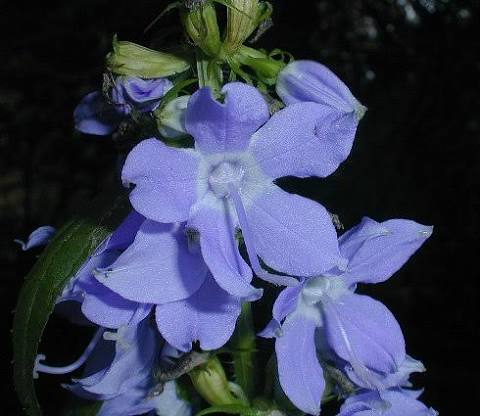
American Bellflower (Campanulastrum americanum) - A striking native wildflower that thrives in Kentucky's rich, moist woods, shaded stream banks, and roadside ditches. Standing anywhere from 2 to 6 feet tall, this annual or biennial plant stands out along summer trails with its elongated spikes of star-shaped, violet-blue blossoms. Unlike typical bellflowers that droop into a cup shape, its petals spread flat to reveal a distinct white ring at the center and a prominently curved style. Blooming reliably from July through September, it serves as an important nectar source for native bumblebees and butterflies navigating the state's forest understories.
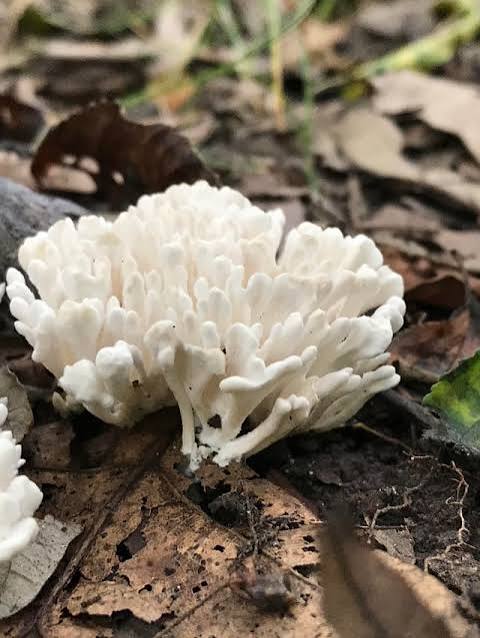
Jellied False Coral (Sebacina schweinitzii) - A fascinating fungus native to Kentucky's rich summer woodlands, frequently found emerging from leaf litter beneath oak and beech trees. While it mimics the intricately branched, upright appearance of true coral fungi, it belongs to an entirely different evolutionary order and is characterized by its tough, rubbery, and slightly gelatinous texture. Its coloration ranges from a clean, pale cream to a dull whitish-tan, often becoming darker and more fused near the base as it matures. Growing in a mutualistic mycorrhizal relationship with surrounding tree roots, this resilient fungus thrives during periods of high humidity and heavy summer rains.
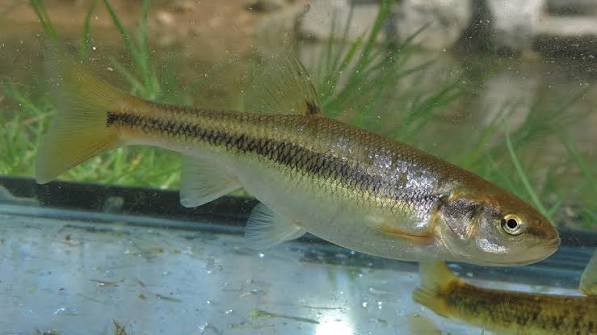
The Creek Chub (Semotilus atromaculatus) - One of the most resilient and spirited native minnows swimming in Kentucky's streams. Far from a helpless little baitfish, it behaves more like a miniature trout—acting as a hardy, opportunistic predator that aggressively hunts insects, terrestrial bugs that fall into the water, and even smaller fish. They are easily identified by their streamlined, torpedo-shaped bodies, that prominent ink-black lateral stripe, and a signature dark spot at the front base of their top dorsal fin. During the spring spawning season, dominant males actually develop specialized, horn-like bumps on their heads called nuptial tubercles, which they use like tiny battering rams to defend the gravel nests they painstakingly build.