Lea Hill Pond
"I'm goin' up the country, babe, don't you wanna go? / I'm goin' to some place where I've never been before..." — Canned Heat
9/20/2026 - 90° Sunny


I've been wanting to check out Lea Hill Pond for a while, if only because I was not sure where to find it. Today I got a good look. I'll leave it to the reader to figure out how to get there, but it is off the path. The pond was covered in Watermeal and shrunken from the lack of rainfall. Lots of frogs! Headed on to the Overlook via Limestone and Leatherwood, then got a good Moss Gibbs lap in. There is a nice green Maypop near the overlook.
Past and Present
Sitting there looking at the low waterline of Lea Hill Pond earlier, it was hard to imagine that 450 million years ago, this entire area was submerged under a shallow sea. The remnants of those ancient waters laid down the Grant Lake limestone that gives Limestone Gorge its character today, long before early pioneers like John Mundell built their grist mills along Floyds Fork in the 1780s. Today, our local lack of rainfall feels a bit more connected to a bigger picture, especially with the news this week about human-caused warming severing a 400-year-old climate link between the Indian and Pacific oceans. Even the origin of our water was in the science headlines; researchers just announced they were “truly astonished” to discover Earth’s early building materials and water likely formed right here in the inner solar system, rather than arriving from beyond Jupiter. It makes the shrinking, watermeal-covered pond feel like a tiny, fragile piece of a massive planetary puzzle.
Wandering through the shaded, quiet stone alcoves of the Moss Gibbs Woodland Garden later offered a nice mental reset from the heavy news cycle. While delegates gather in New York this week for the 81st UN General Assembly to address accelerating sea-level rise, manage planetary technological transformations, and navigate a seemingly endless string of global conflicts, the forest simply keeps doing its thing. Seeing that solitary, unripe Maypop clinging to its vine near the overlook was a perfect little reminder of resilience. Fall is right around the corner, promising cooler temperatures and some much-needed rain for the frogs, and despite all the world's rapid shifts, the park remains a beautiful, grounded place to escape and recharge.


.jpg)

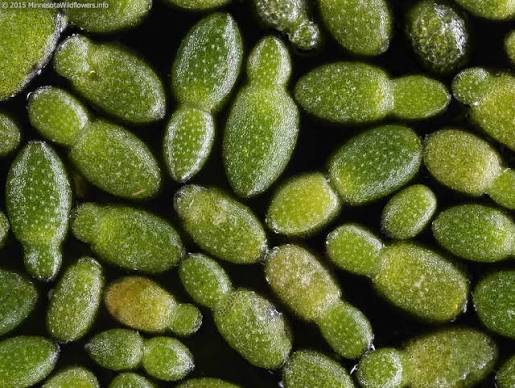
Watermeal (Wolffia species) - The smallest flowering plant on Earth, appearing as tiny, rootless, bright-green grains floating across calm freshwater bodies. Measuring under a millimeter across—roughly the size of a single seed or grain of cornmeal—each plant consists of a simple rounded frond that feels gritty or sandy when scooped up. Because it reproduces rapidly via budding in stagnant, nutrient-rich waters, watermeal can quickly cover an entire pond in a dense, carpet-like mat. Although heavy infestations can block sunlight from underwater vegetation, the plant is completely non-toxic and serves as a high-protein food source for waterfowl and aquatic wildlife.
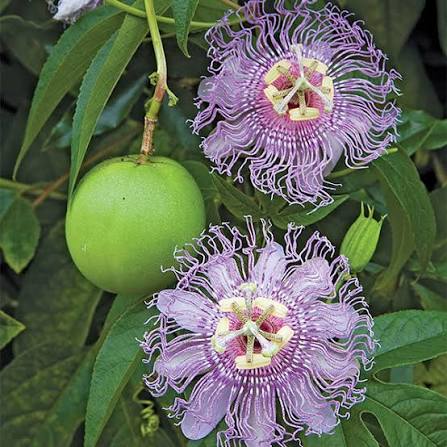
Maypop (Passiflora incarnata) - Also known as the purple passionflower, is a fast-growing perennial vine native to the southeastern United States. Celebrated for its complex, otherworldly purple-and-white flowers, the plant climbs using curling tendrils and features distinctive three-lobed leaves. In late summer and fall, it bears smooth, egg-shaped green fruits that soften, wrinkle, and turn yellowish-green as they mature, yielding a fragrant, sweet-tart pulp surrounding edible seeds. Named for the satisfying "pop" sound the hollow fruit makes when crushed—or its tendency to pop out of the ground in spring—the maypop is both a favorite wild forage and a crucial host plant for native butterfly species like the Gulf Fritillary.