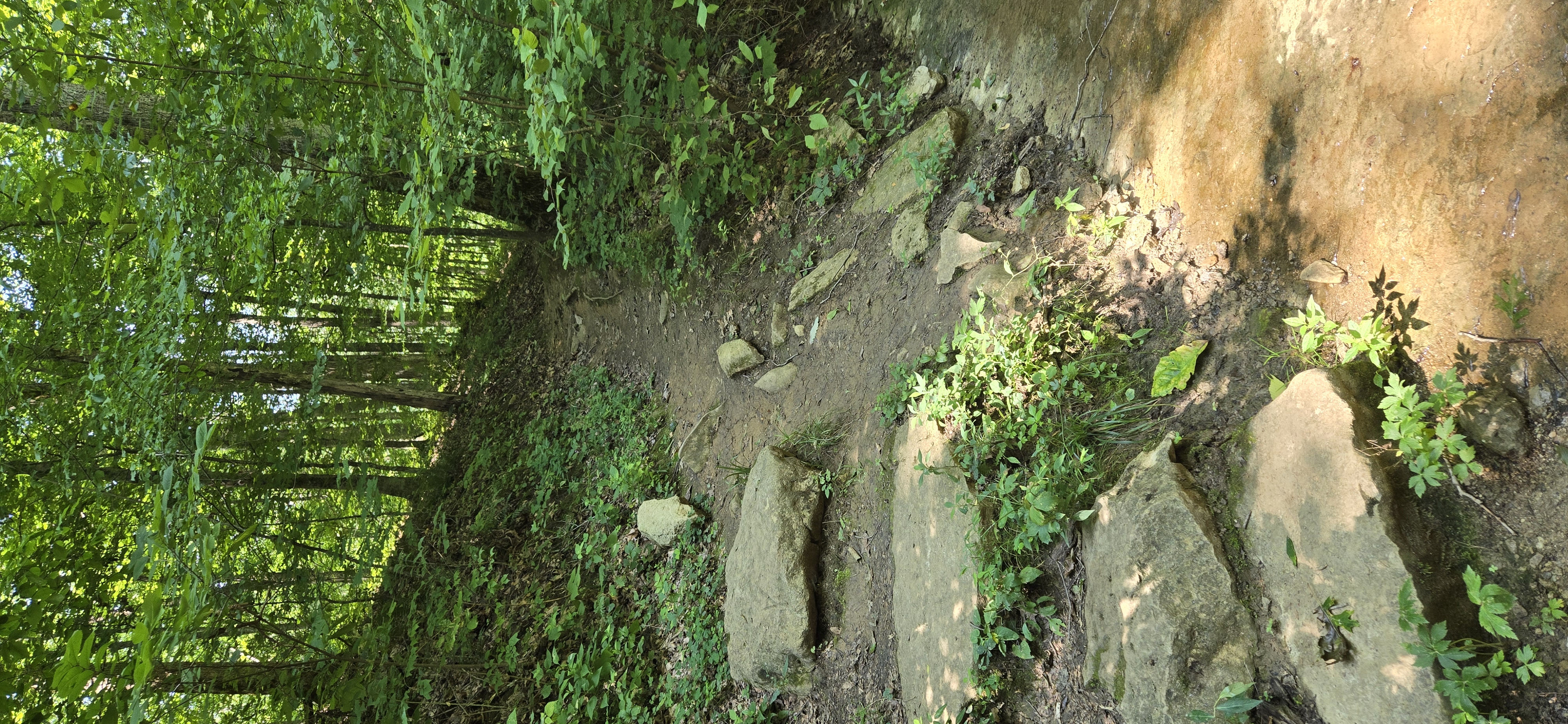
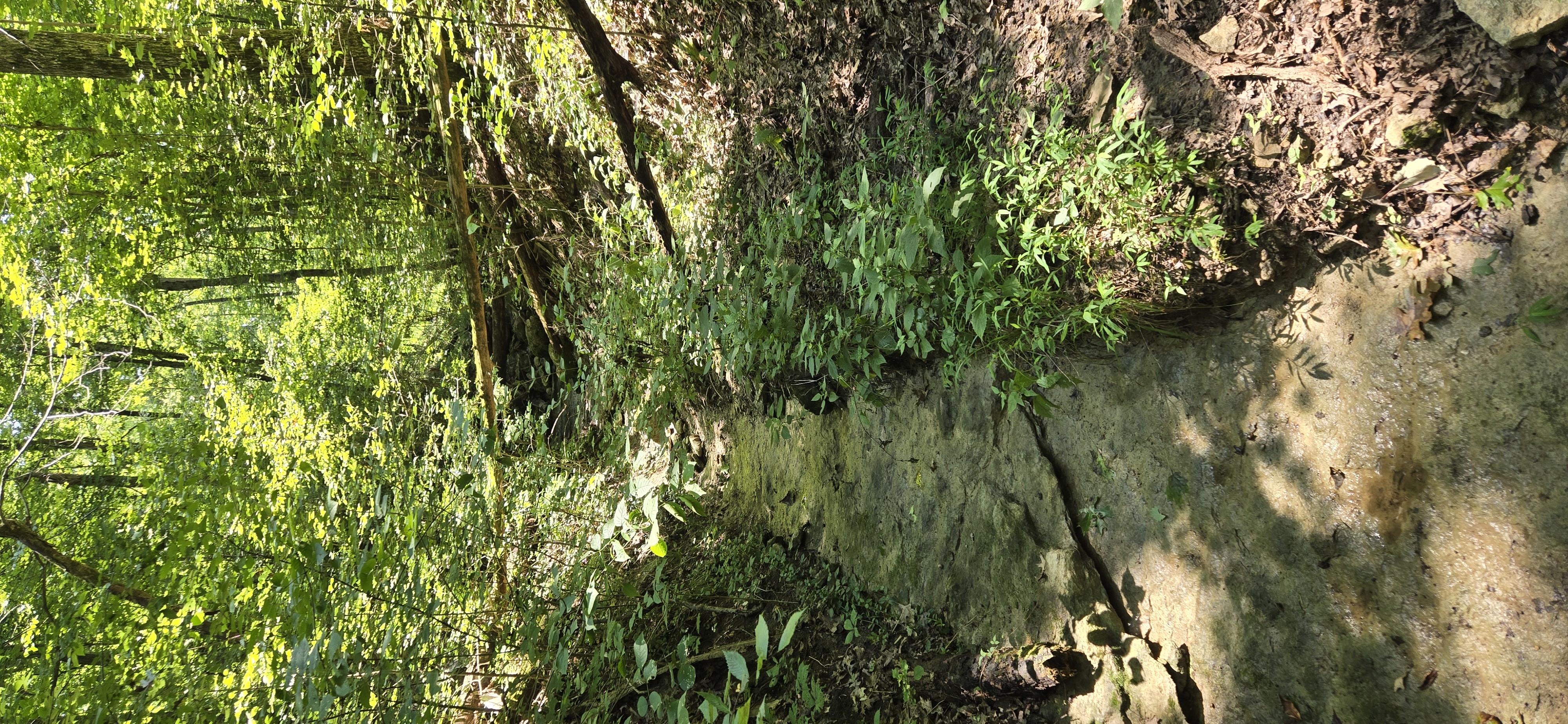
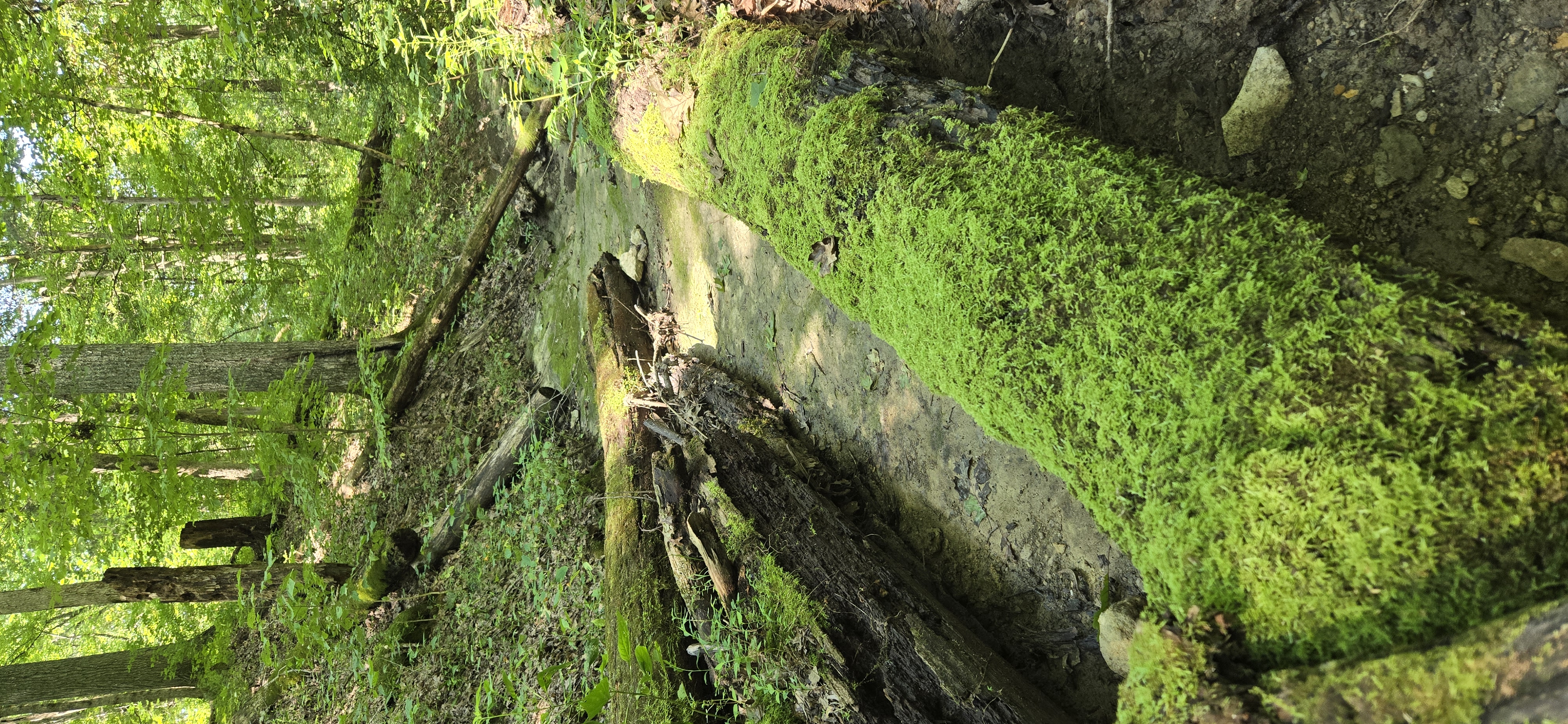
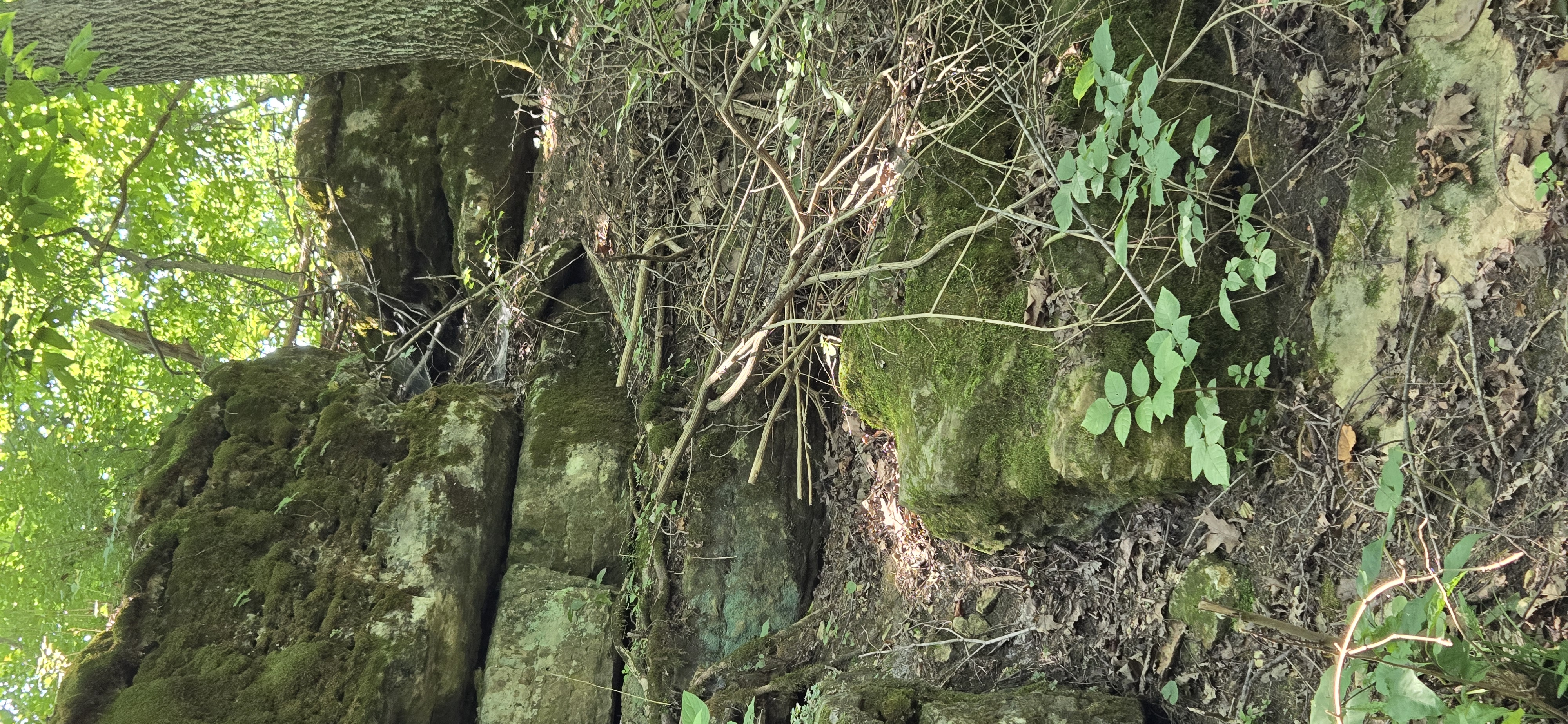
Limestone Gorge
"There is a road, no simple highway / Between the dawn and the dark of night / And if you go, no one may follow / That path is for your steps alone." — Grateful Dead (Ripple)
8/9/2026 - 80° Sunny
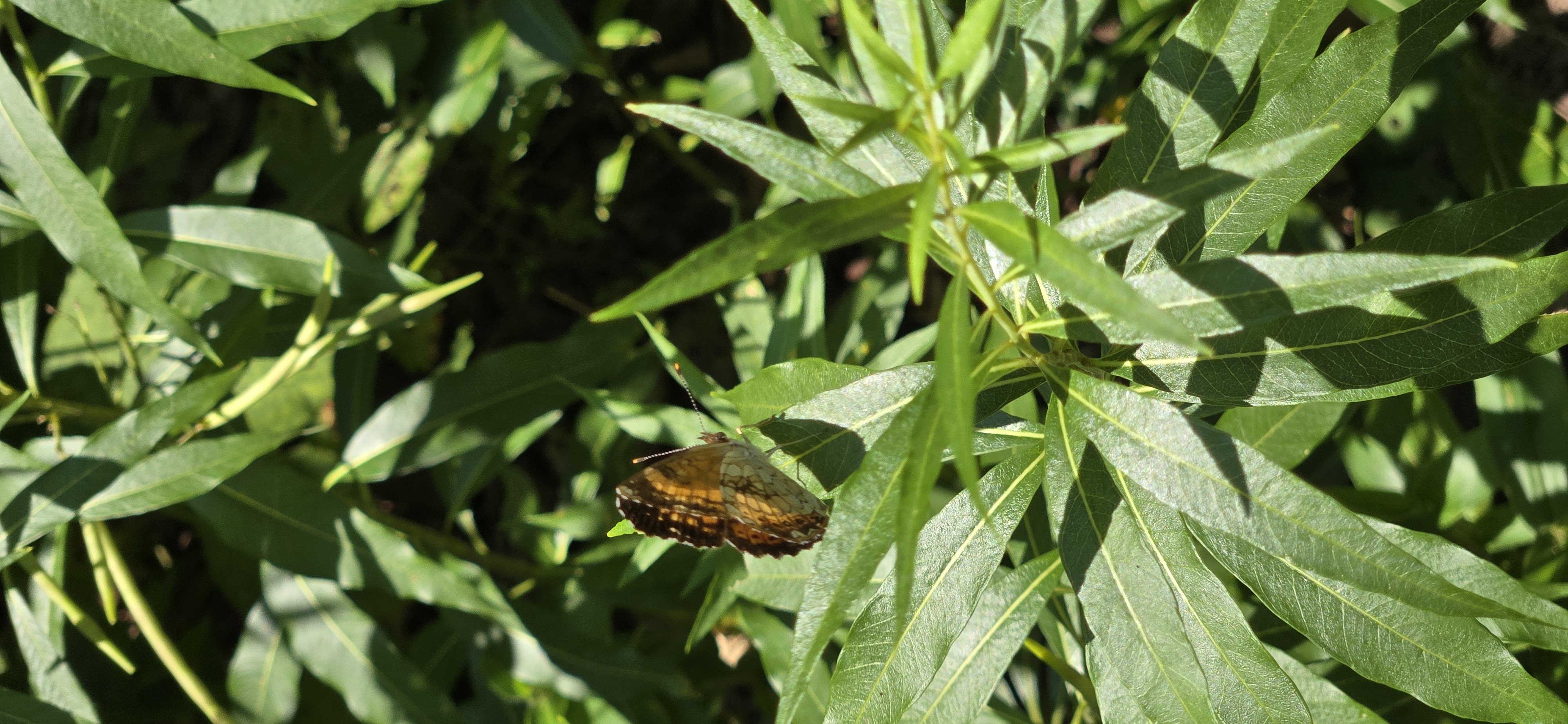
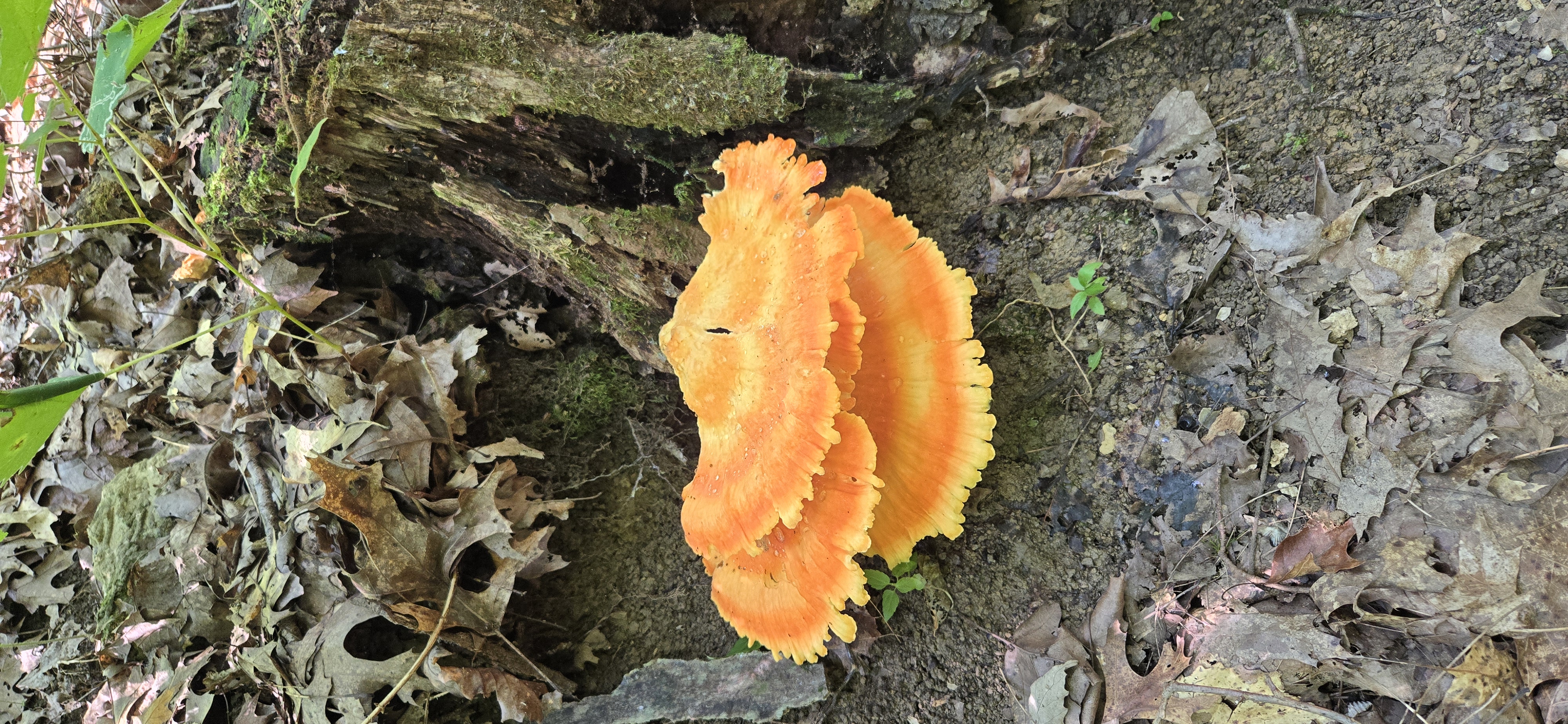
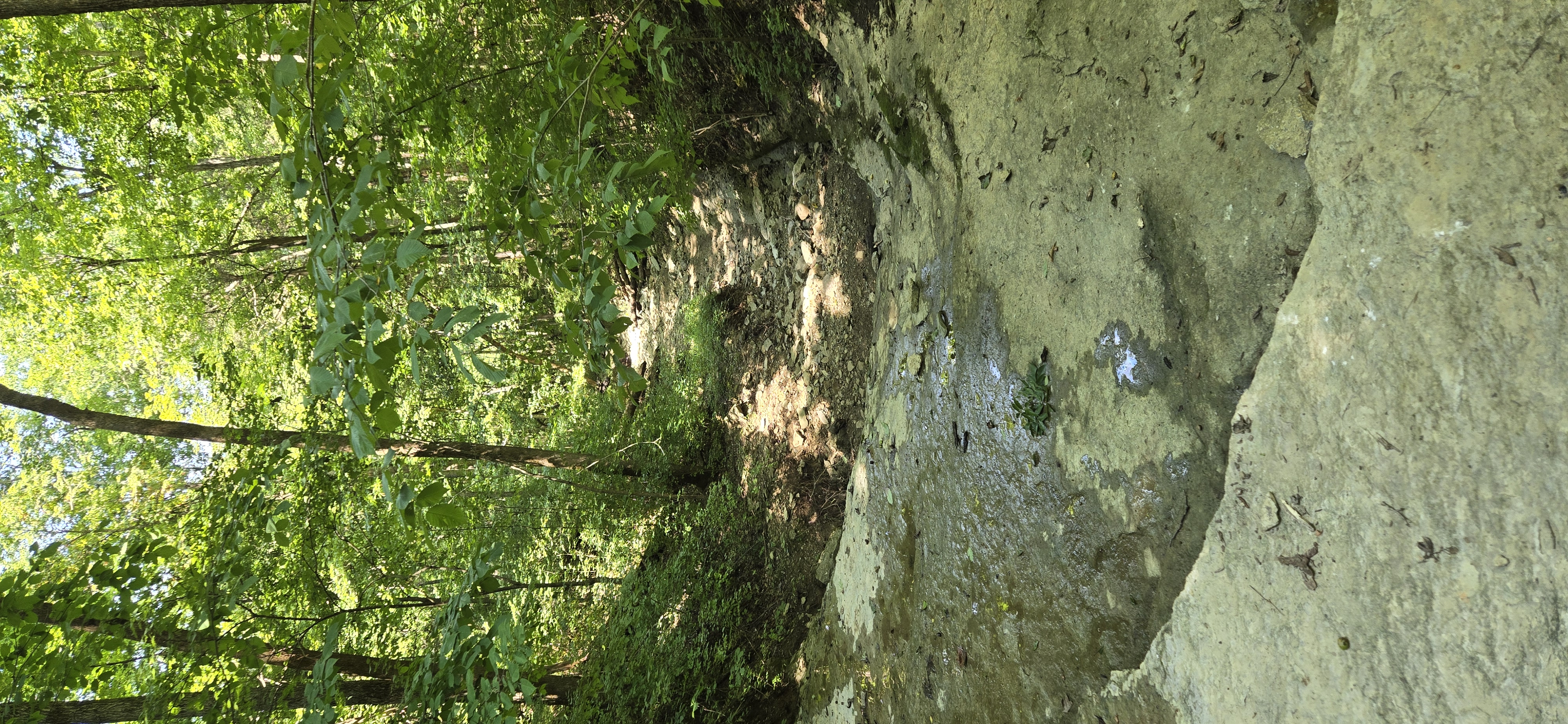
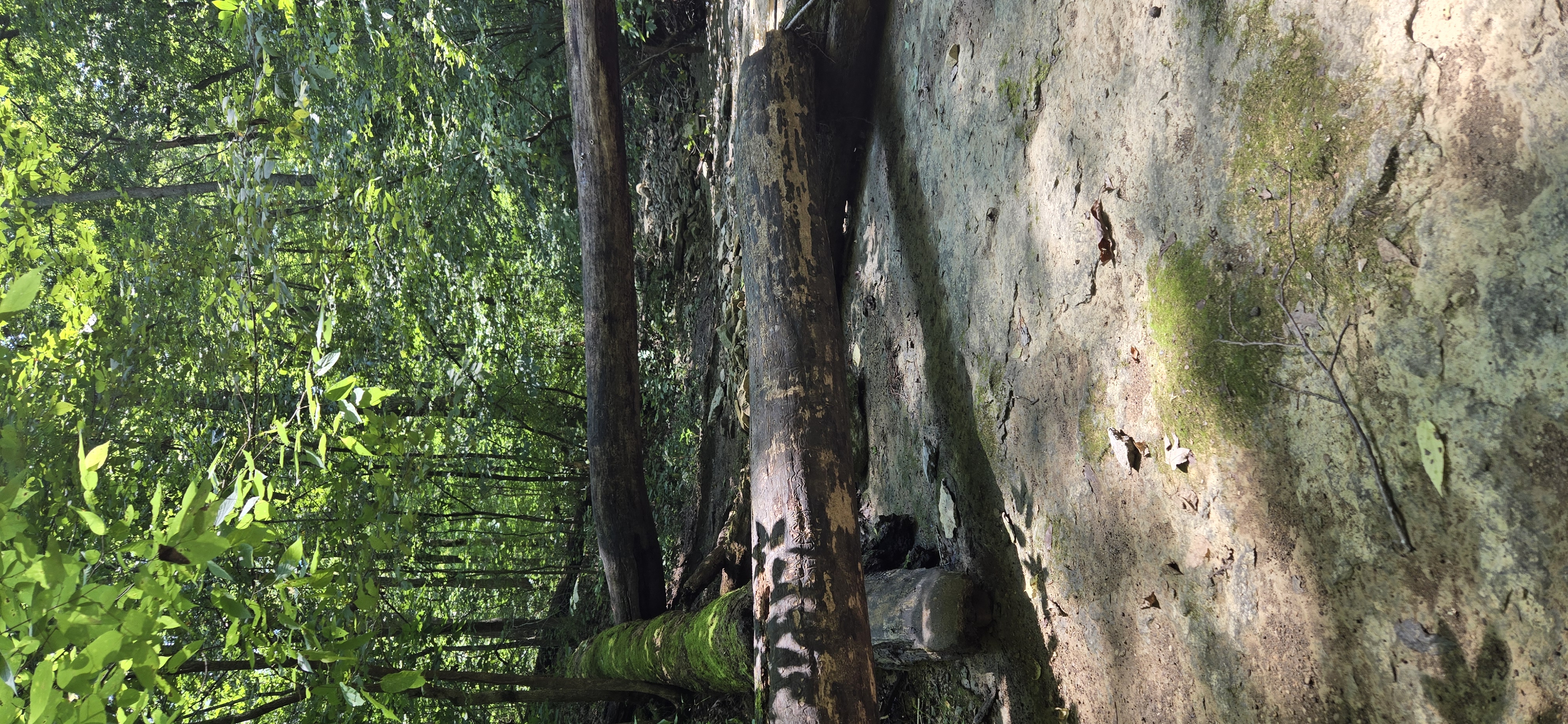
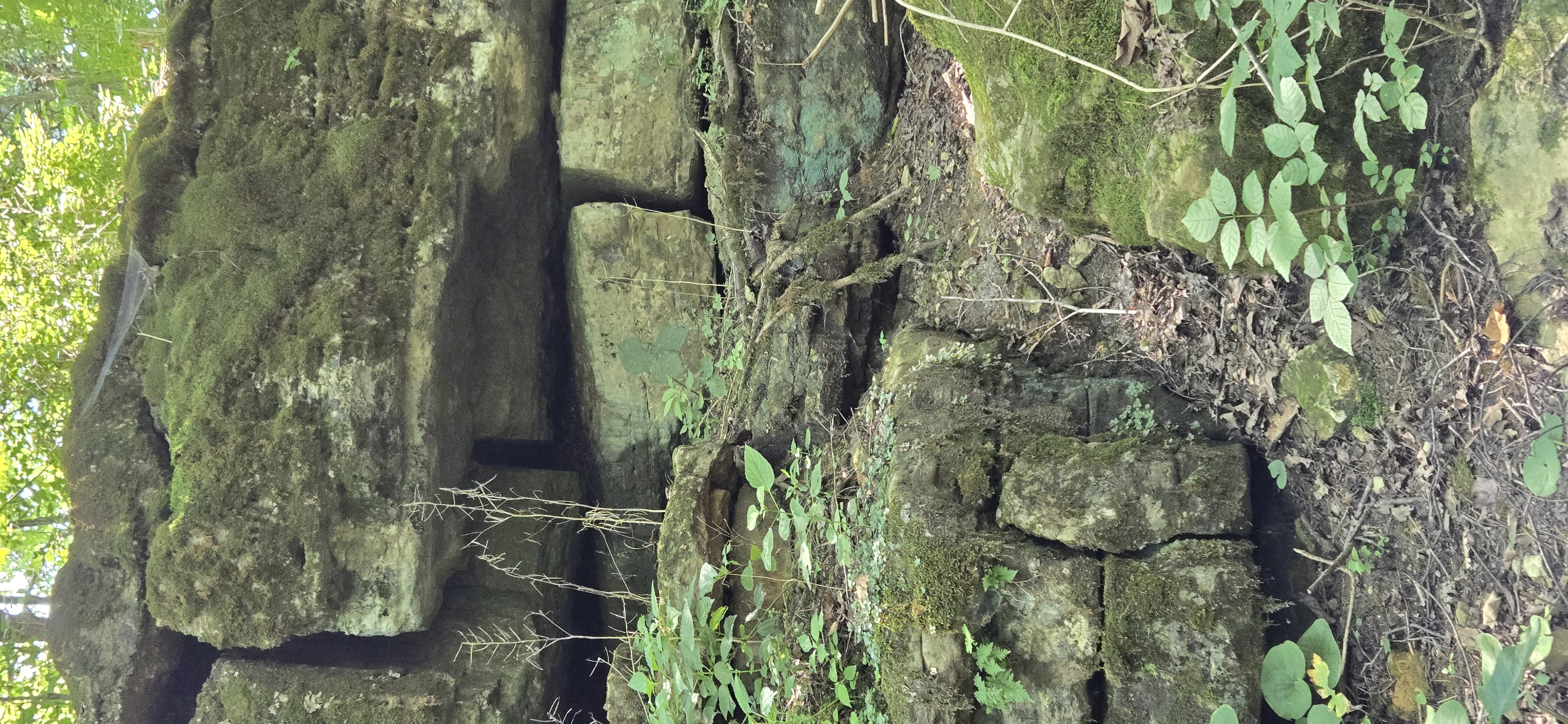
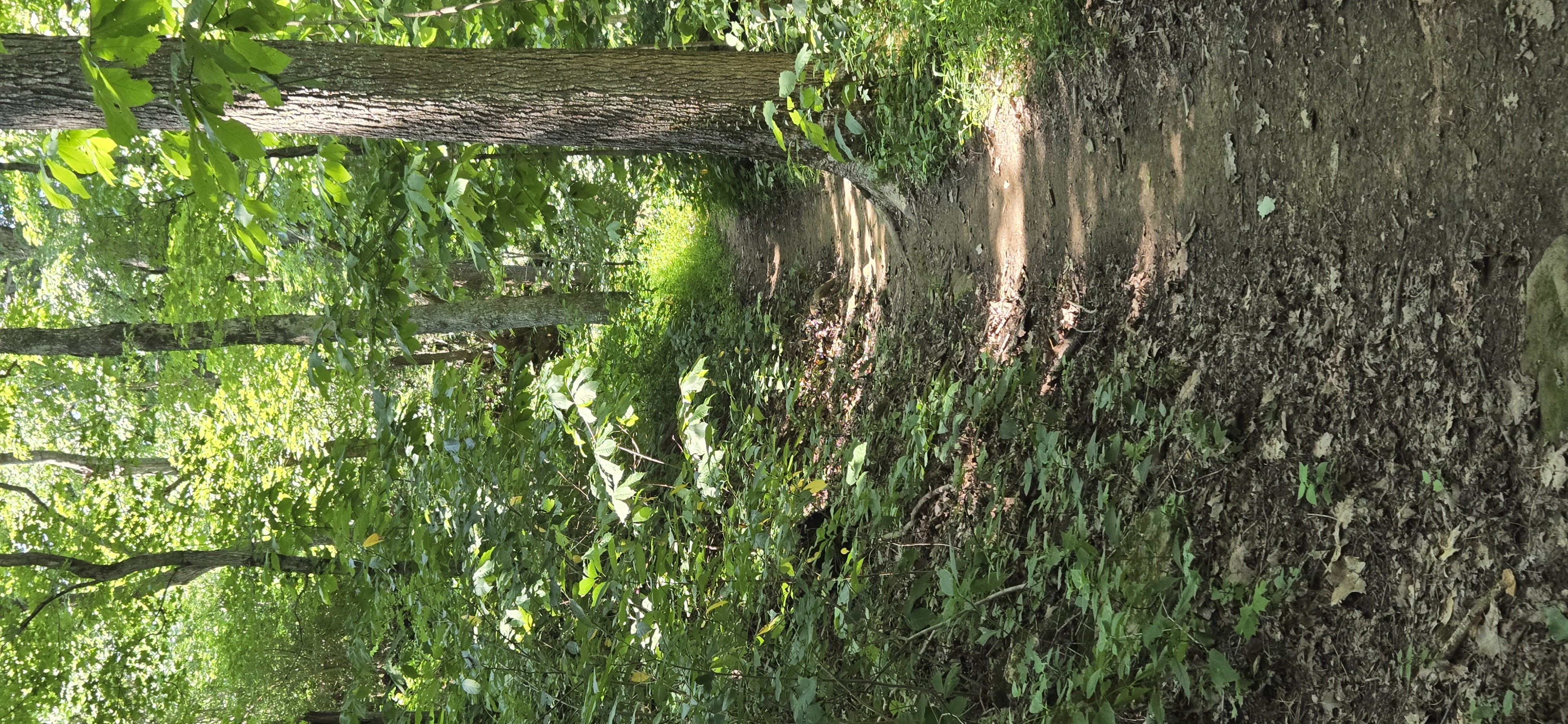
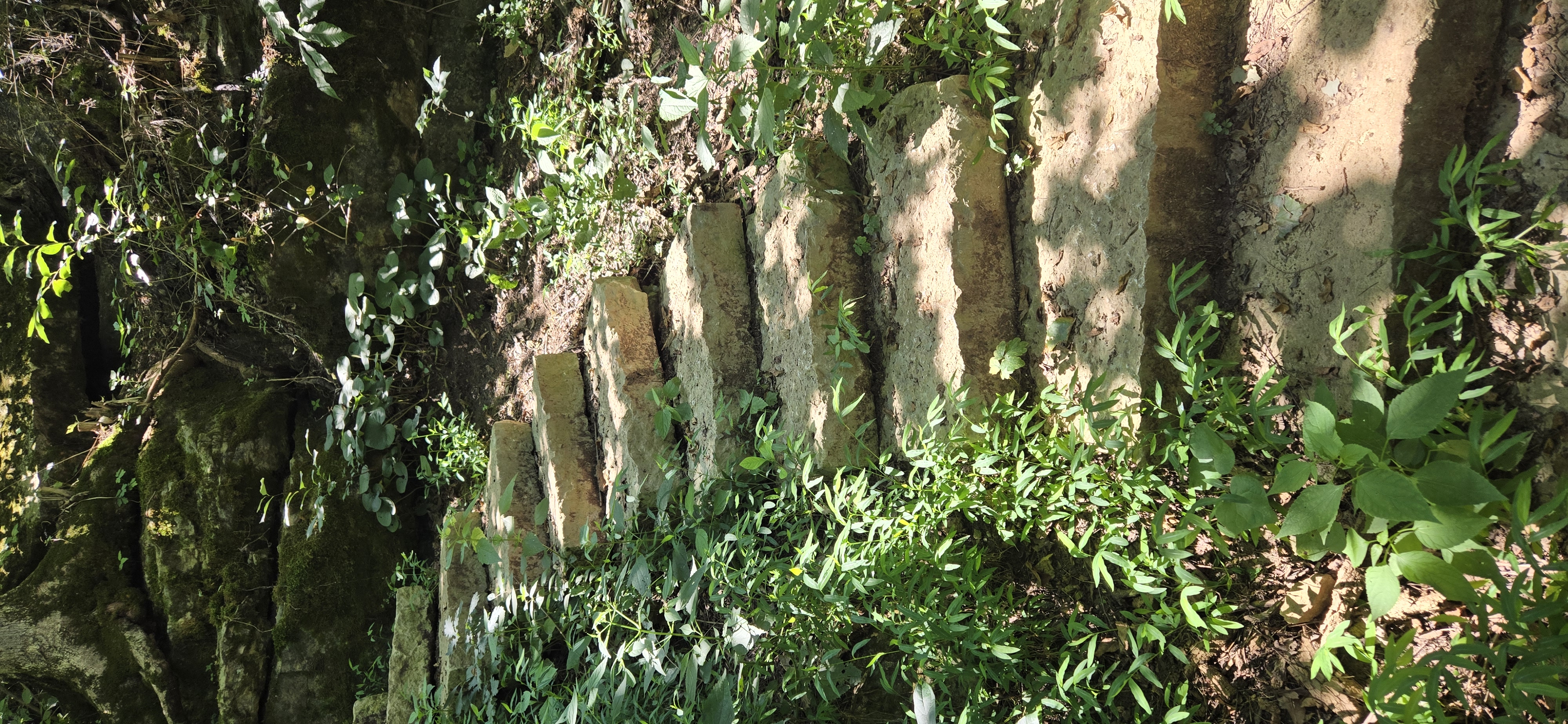
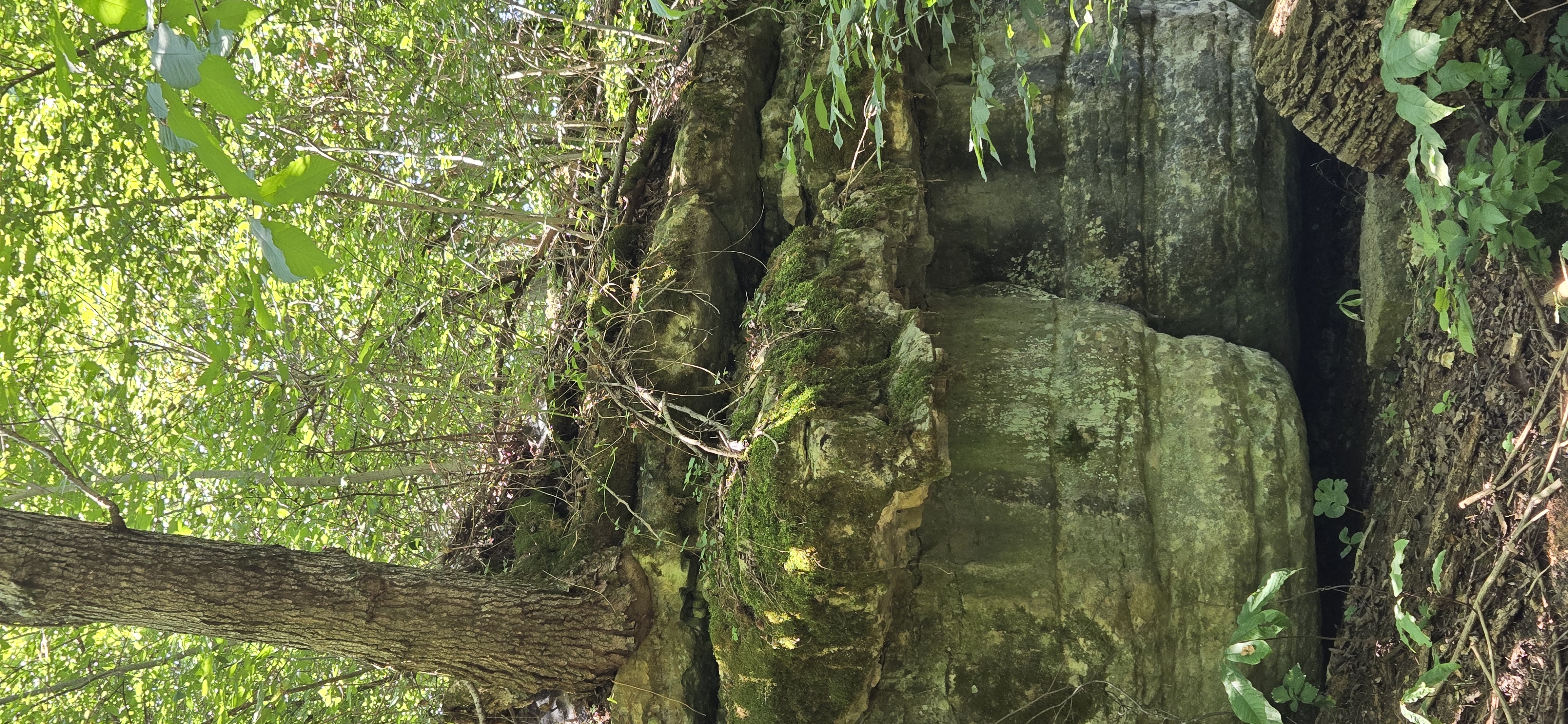
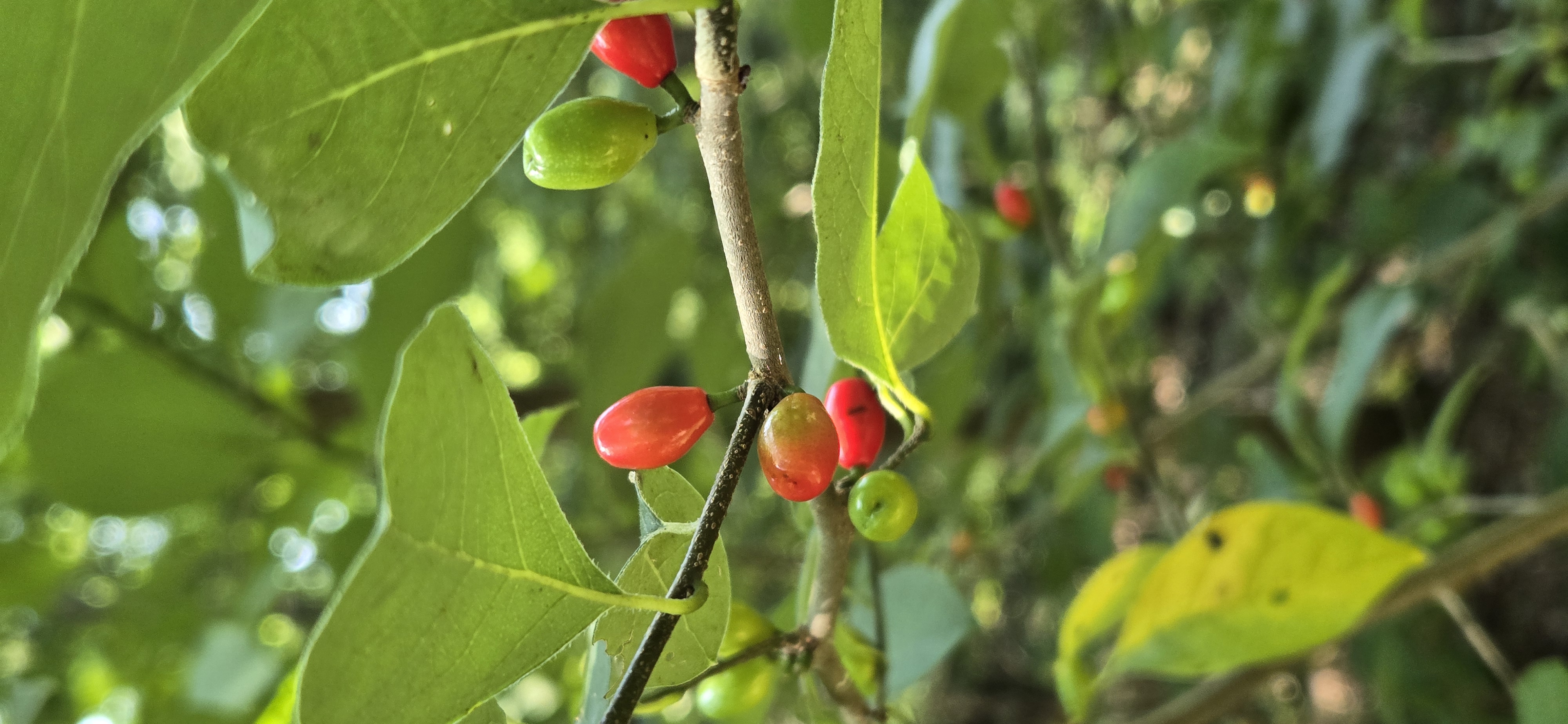
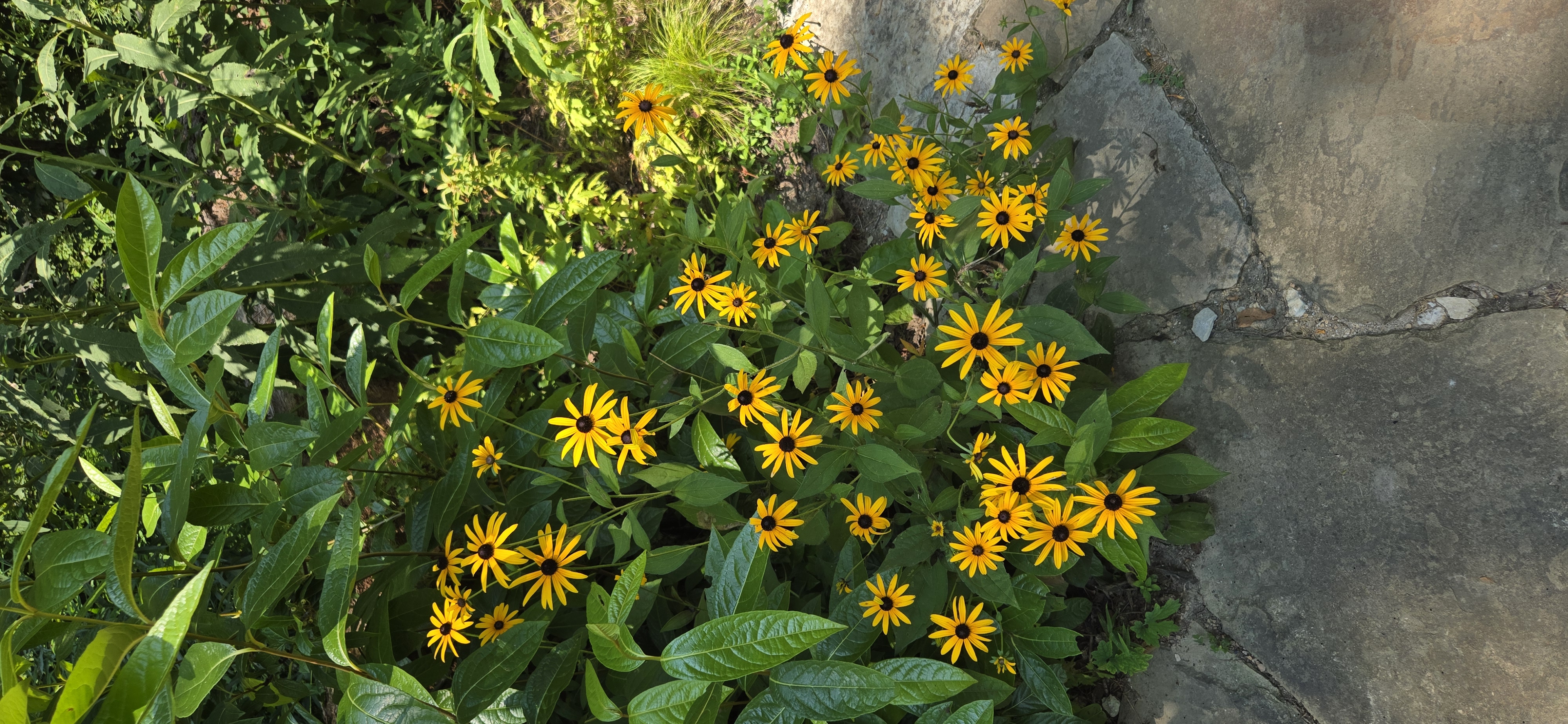
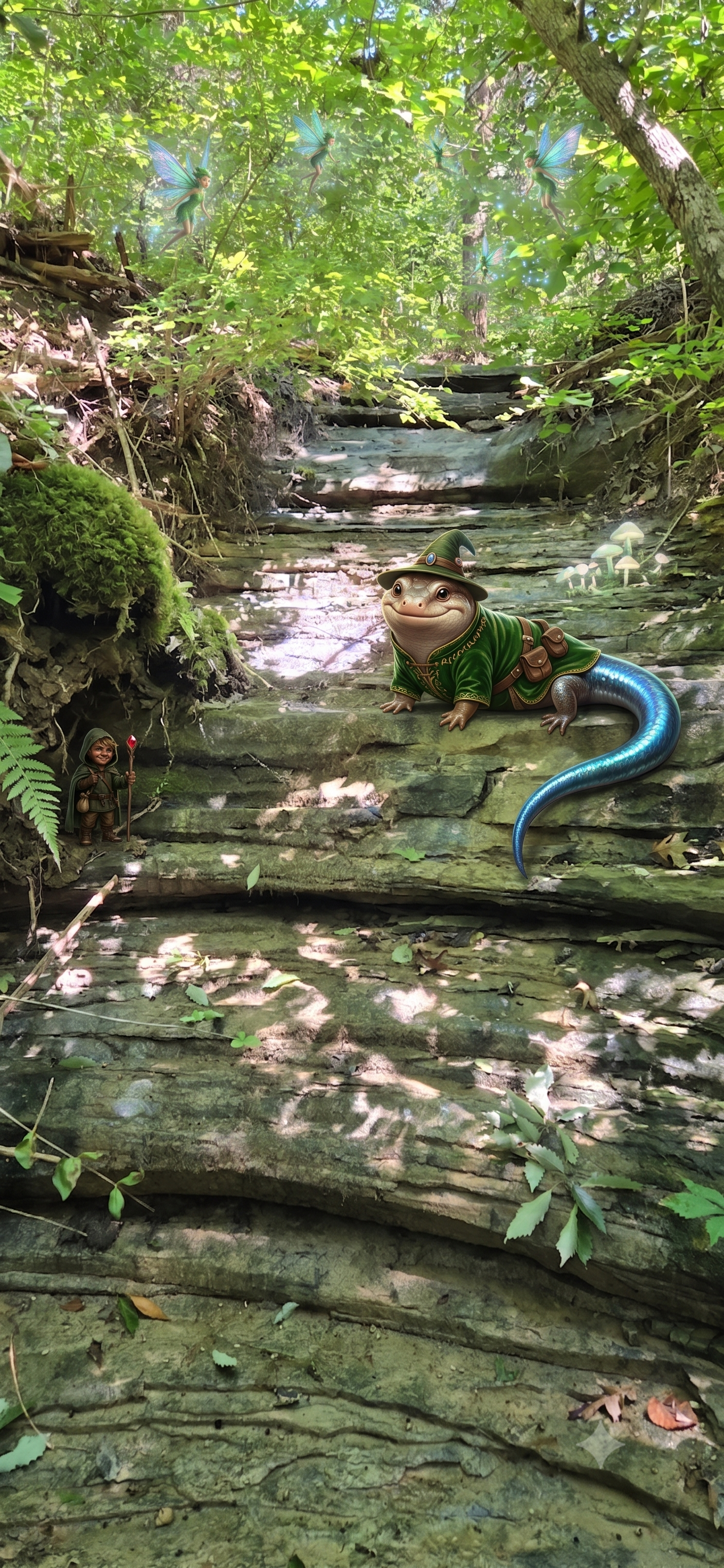
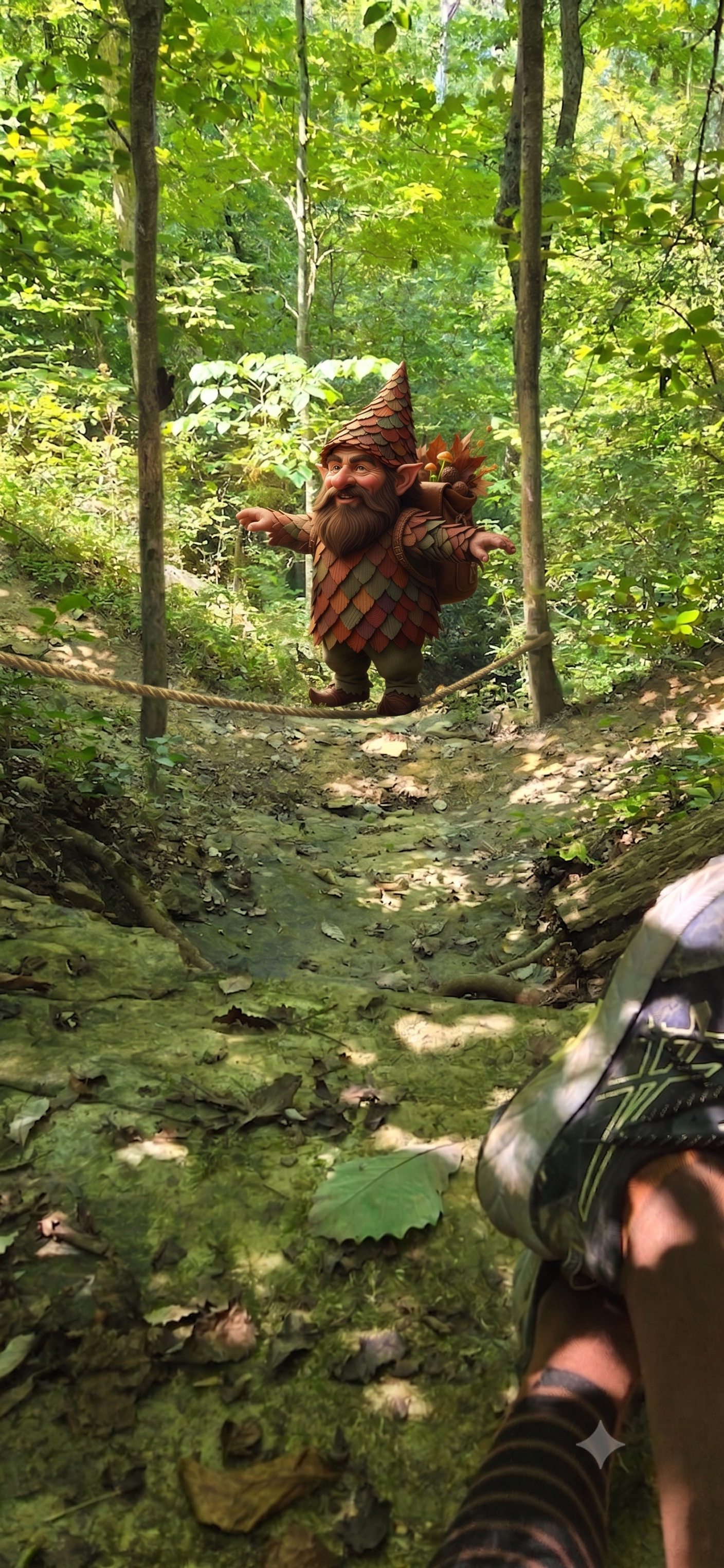
Legs were heavy today on the limestone path. Lot of lee-zards (broad-headed skink) scurrying about, but I was not able to get any on camera. Spotted some great looking Chicken of the Woods and Spicebush berries were coming in. Took a side trip on the Leatherwood Trail and dipped in to see the flowers. Chased around a Pearl Crescent until I finally got a picture of her.
Past and Present
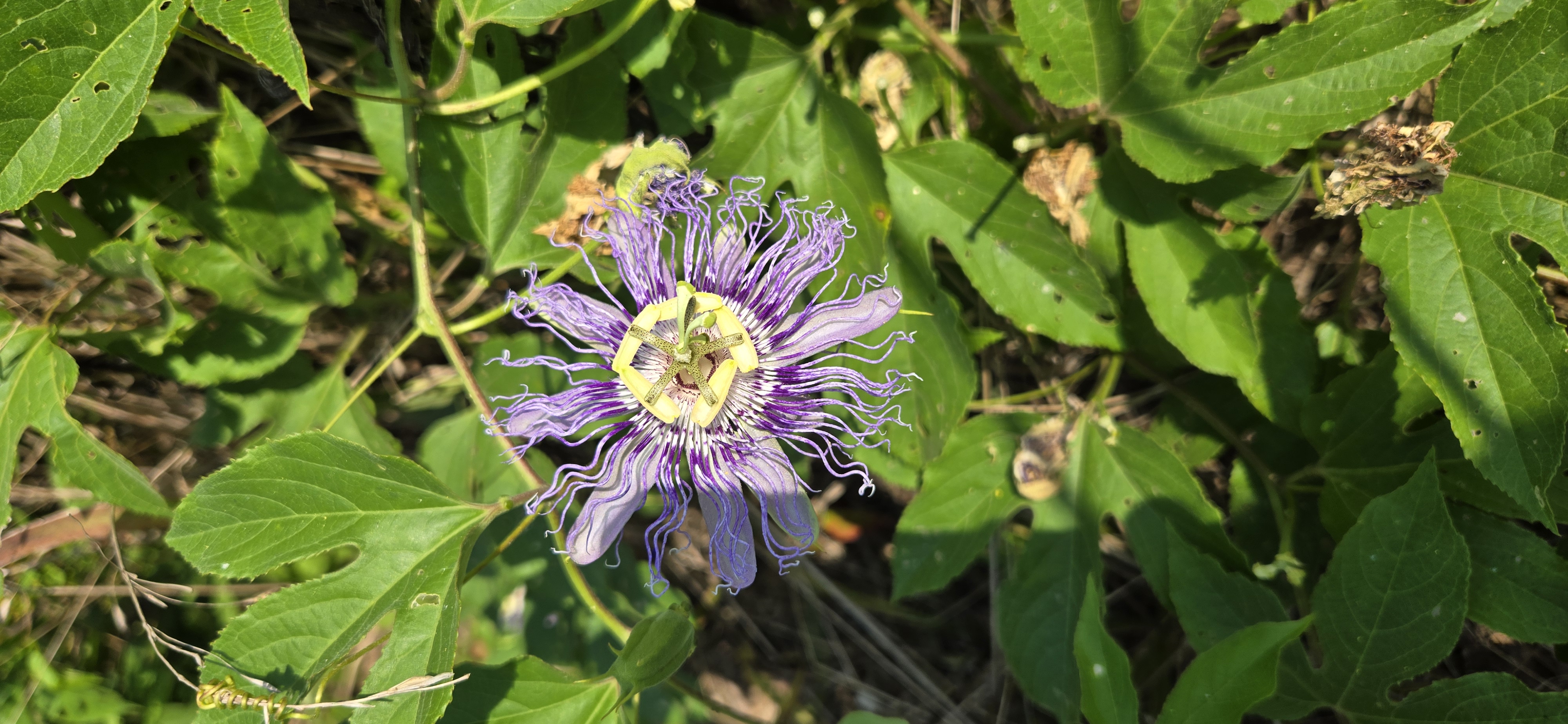
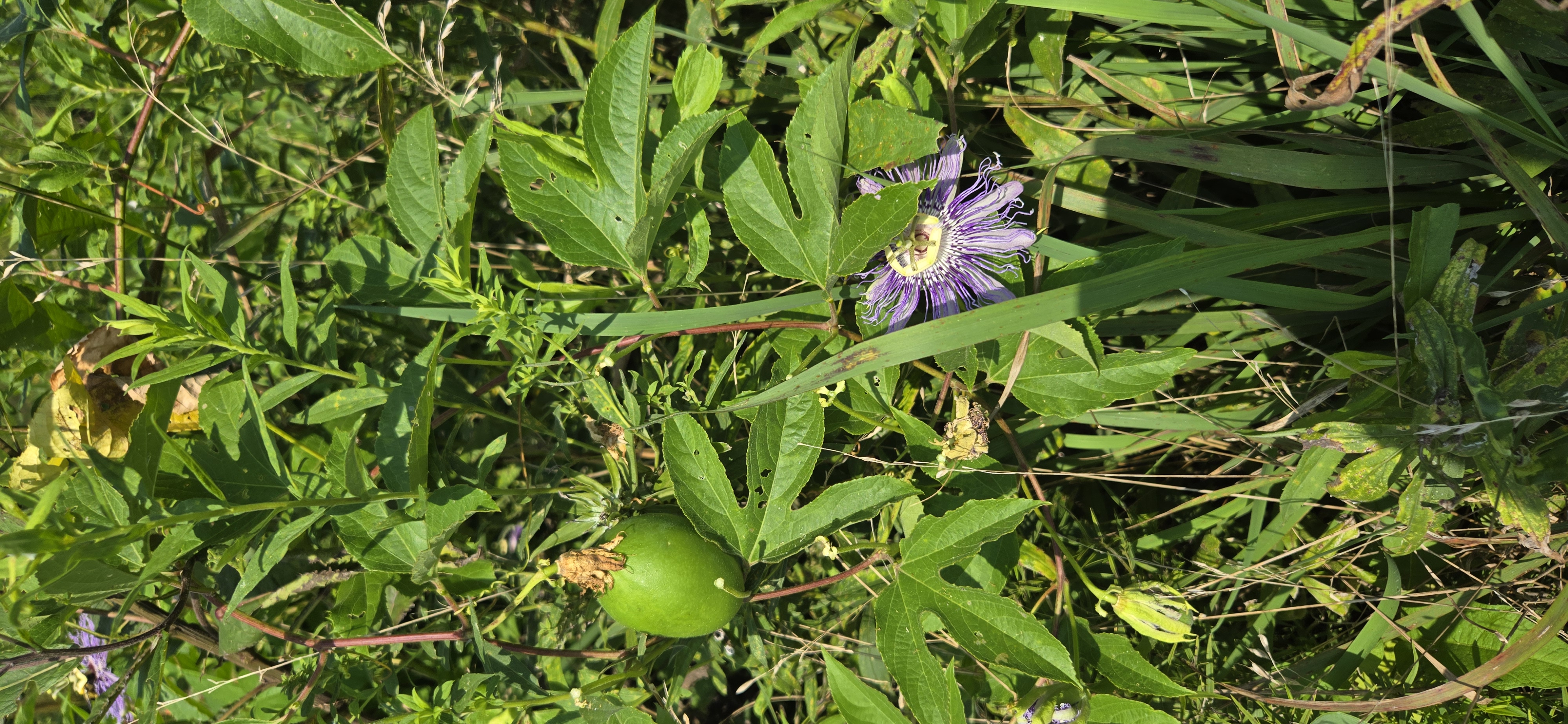
Pushed a bit further down toward the creek bed where the massive limestone cliffs overhang the trail—the same ancient bedrock early pioneers and George Rogers Clark scrambled over when surveying the Kentucky frontier back in the late 1700s. Caught my breath in the shade near a thicket of vines and hit the jackpot with a brilliant Purple Passionflower in full bloom. It's wild how quiet these ravines stay while the rest of the world churns along. Checked the headlines back at the trailhead bench: the usual heavy political noise, passing reports of strikes in Eastern Europe, and local news about Metro Council placing a moratorium on new data centers downtown to protect the local power grid.
The biggest takeaway from the week’s news hit a lot differently out here, though—researchers just announced they’ve managed to create quantum entanglement using ordinary, unpolarized sunlight instead of massive, power-hungry lasers. Watching the afternoon sun filter through the forest canopy onto the passionflower’s wild purple fringe, the comparison was hard to miss. For all our high-tech hurdles and noisy conflicts, nature’s been running the ultimate low-energy network right in front of us all along. Left the woods feeling grounded, refreshed.
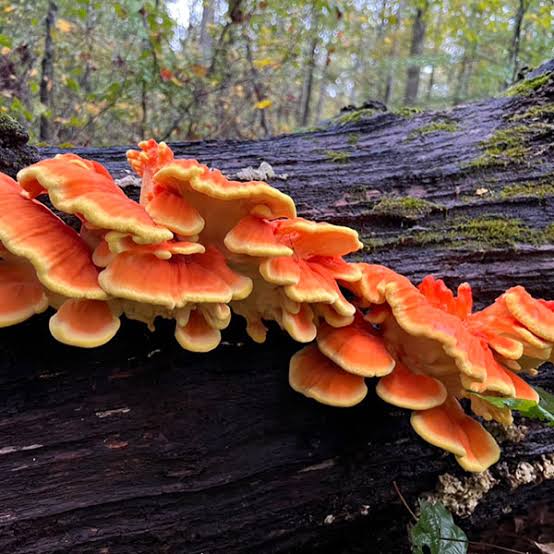
Chicken of the Woods (Laetiporus) - A highly prized wild edible mushroom recognized for its vibrant, fan-shaped brackets of bright orange and yellow. Found growing on living or decaying hardwoods—particularly oak trees—it gets its name from its uncanny resemblance to chicken breast in both flavor and meaty texture when cooked. Unlike many common mushrooms, it is a polypore, meaning its underside features tiny pores rather than traditional gills, which helps distinguish it from poisonous lookalikes like the Jack-o'-lantern mushroom. Foragers seek it out in late summer and autumn, harvesting it while young and tender, though like many wild mushrooms, it must always be thoroughly cooked prior to eating.
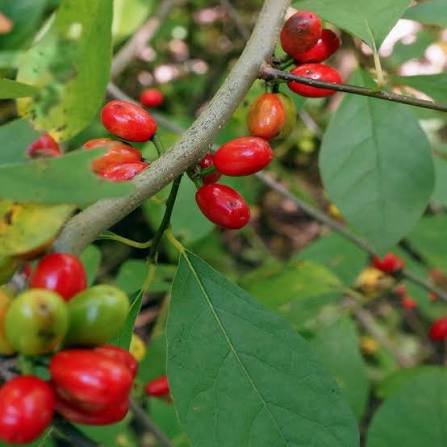
Spicebush berries (Lindera benzoin) - Glossy, oval-shaped drupes that transform from green to a vibrant, eye-catching crimson as late summer arrives. Packed with rich lipids and essential oils, these nutrient-dense fruits serve as a vital energy boost for migrating songbirds preparing for their long journey south. Beyond their ecological value, the berries emit a warm, citrusy fragrance when crushed—a trait that made them a prized wild spice among Native Americans and early European settlers, who dried and ground the ripe fruits to use as a local, aromatic substitute for traditional allspice.
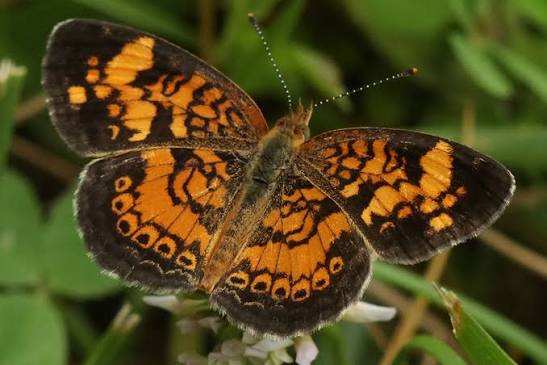
The Pearl Crescent (Phyciodes tharos) - A small, vibrant butterfly commonly found fluttering along North American fields, pastures, and sunny trail edges. Easily identified by its intricate pattern of bright orange and dark brown markings on the upperside, it earns its name from a subtle, pearly-white crescent spot nestled within a dark patch on the underside of its hindwing. Female Pearl Crescents lay their eggs primarily on native asters, which provide essential nourishment for the emerging caterpillars. Flying low to the ground and frequently pausing to bask in sunny patches, these resilient pollinators produce multiple generations each year, making them a constant and cheerful presence from early spring through late autumn.